
Precision hinge alignment, compression seal integrity, and smooth crank operator connections. Impact Windows Installation installs casement windows the right way for maximum ventilation and lasting performance in Penn Valley.
Call +1-844-723-1263 Now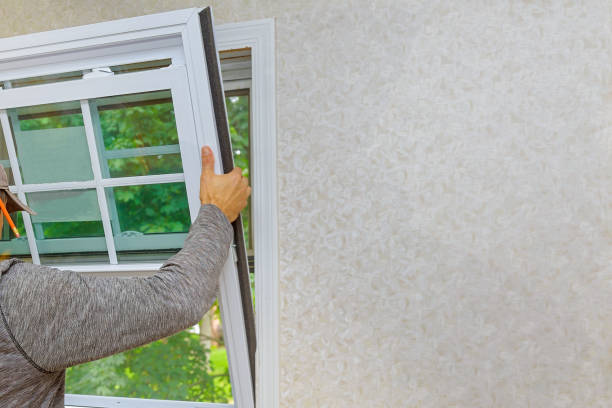
A casement window operates on a fundamentally different principle than most other window types. Rather than sliding up and down or from side to side, a casement window uses a single hinged panel that swings outward from a side-mounted hinge, driven by a crank mechanism called an operator. When you turn that crank handle, the entire sash rotates open on its vertical hinge, exposing the full glass opening to the outside. This means that when a casement window is fully open, you have access to 100 percent of the window's opening area, unlike a standard double-hung window that can only open to half its height at most.
The ventilation difference this creates is substantial. Double-hung windows allow either the top or bottom sash to slide, giving you half the window's total area at any one time. Casement windows, by contrast, open fully outward, acting like a sail that catches passing breezes and channels them directly into the room. This matters most in homes without central air, in rooms where cross-ventilation is the primary comfort strategy, and in climates where night air provides natural cooling during warm months. The same total window size provides dramatically more airflow when the configuration is casement rather than double-hung.
The compression seal is the technical advantage that sets casement windows apart in terms of energy efficiency. When you crank a casement window shut, the sash presses firmly against the frame all the way around its perimeter. The harder you close the crank, the tighter that perimeter seal becomes. This compression mechanism is the same principle used in refrigerator door seals. Compare this to a double-hung window, where the meeting rail and the side channels are sliding fits that allow some degree of air movement by design. Casement windows can achieve significantly lower air infiltration ratings because their seal tightens under pressure rather than relying on a fit that must allow movement.
Casement windows are also the right design choice for specific placement scenarios where other types fail. A kitchen window installed above a deep counter is perhaps the most common example: reaching forward and up to push or pull a double-hung sash is awkward at best and impossible for many people. A casement window in that same location opens fully with a simple quarter-turn of the crank handle, no reaching required. The same logic applies to bathroom windows high on a wall, windows behind furniture, and any opening where direct access to the sash is physically limited.
The hinge and operator system is the mechanical heart of every casement window, and proper installation of these components is what separates a window that performs for decades from one that begins failing within a few years. The hinge arm must be mounted in precise alignment with the operator mechanism so that the sash tracks smoothly through its full arc without binding or dragging. Misalignment at installation puts lateral stress on the operator gears, accelerating wear. The sash must be plumb and square within the frame before the operator is connected, because any racking in the sash translates directly into operator strain.
Common casement window failure points almost always trace back to either original installation quality or deferred maintenance. Operator failure typically results from years of binding caused by a slightly misaligned or out-of-square sash. Hinge sag develops when the hinge arm screws were not properly anchored into solid frame material, allowing the hinge to gradually pull away from the frame and drop the outer edge of the sash. Weatherstrip degradation at the corners is the most common source of air infiltration in an aging casement, and it is a detail that quality installation addresses from day one by selecting the correct weatherstrip profile for the frame material and ensuring corner miters are properly sealed. At Impact Windows Installation, we address every one of these points as part of standard installation procedure so that the window you receive performs as intended from the first day and for years afterward.
Every casement configuration handled with precision. From standard single units to specialty combinations, Impact Windows Installation covers it all.
Full installation of a single-panel side-hinged casement unit into a prepared opening. Includes hinge alignment, operator connection, weatherstrip fitting, and final crank-and-seal verification in Penn Valley, CA.
Learn MoreTwo side-hinged casement panels that open outward from a shared center point. Ideal for wider openings, patio access, or anywhere you want a dramatic full-width opening. Precision center-meeting rail alignment included.
Learn MoreWhen your existing frame is structurally sound, insert-method replacement preserves the frame and installs a new sash and operator into it. Faster installation, less disruption, and no exterior trim work required when frame condition supports it.
Learn MoreA fixed picture window in the center flanked by operable casement units on either side. Delivers the panoramic glass area of a picture window combined with ventilation on both ends. Popular for living rooms and dining areas in Penn Valley.
Learn MoreCasement installation using Low-E glass coatings and optional triple-pane configurations for maximum thermal performance. Ideal for homes in Penn Valley where energy bills or noise reduction are priorities. Full performance spec documentation provided.
Learn MoreOperator replacement for windows where the crank mechanism has failed, become stiff, or stripped out. We source matching replacement operators for most major manufacturers and restore smooth full-open function without full window replacement.
Learn MoreFour quality pillars that every casement installation in Penn Valley must pass before we consider the job complete.
Every hinge arm is set to manufacturer tolerances with the sash verified plumb and square before the operator is ever connected. Misalignment causes operator failure within years.
After installation, we close the sash fully and check the perimeter seal at multiple points to confirm even compression contact. No cold spots, no air gaps.
We operate the crank through its full range of motion multiple times, listening for binding or resistance, before signing off. A smooth operator on day one stays smooth for years.
Corner miters sealed, weatherstrip profile matched to the frame material, and compression verified at all four sides. Proper weatherstrip fit is the last line of defense against drafts.
A clear four-step process so you know exactly what happens from first contact to final inspection in Penn Valley, CA.
We visit the location, measure the rough opening precisely, check the rough framing for square and level, and confirm the wall depth supports the specified casement profile. Measurements are recorded before ordering.
The rough opening is prepared with proper shimming points established, the sill is confirmed level, and all hinge mounting locations are identified and pre-drilled into solid framing material.
The casement unit is set into the opening, shimmed to plumb and square, fastened through the frame, and the operator is connected. The sash is cycled through its full arc to verify smooth function before moving on.
Exterior flashing and caulk applied, interior trim fitted, weatherstrip verified at all corners, and the crank operated multiple times for final confirmation. You receive a functional, weathertight casement window.
Real experiences from customers who chose Impact Windows Installation for casement window installation in Penn Valley, CA.
"We had a double-hung window above our kitchen counter that was genuinely impossible to open once we put in the deep farmhouse sink. The counter just made it unreachable. Switching to a casement completely solved the problem. One quarter-turn of the crank and it opens fully. Worth every penny."
"We replaced sliders throughout the whole house with casements as part of a bigger renovation. The airflow difference is dramatic and not subtle at all. On a breezy day, those windows pull air through the house in a way the sliders never could. The installation team knew exactly what they were doing."
"1960s ranch house with the original steel casements that had completely failed. We were nervous about whether modern replacements would match the profile of the home, but the team matched the sight-line dimensions closely and the result looks original. Tight seal, smooth crank, no complaints."
Call Impact Windows Installation today. Our casement installation specialists serve Penn Valley and surrounding areas in Penn Valley, CA. No forms, just a direct conversation about your project.
Call +1-844-723-1263 Now